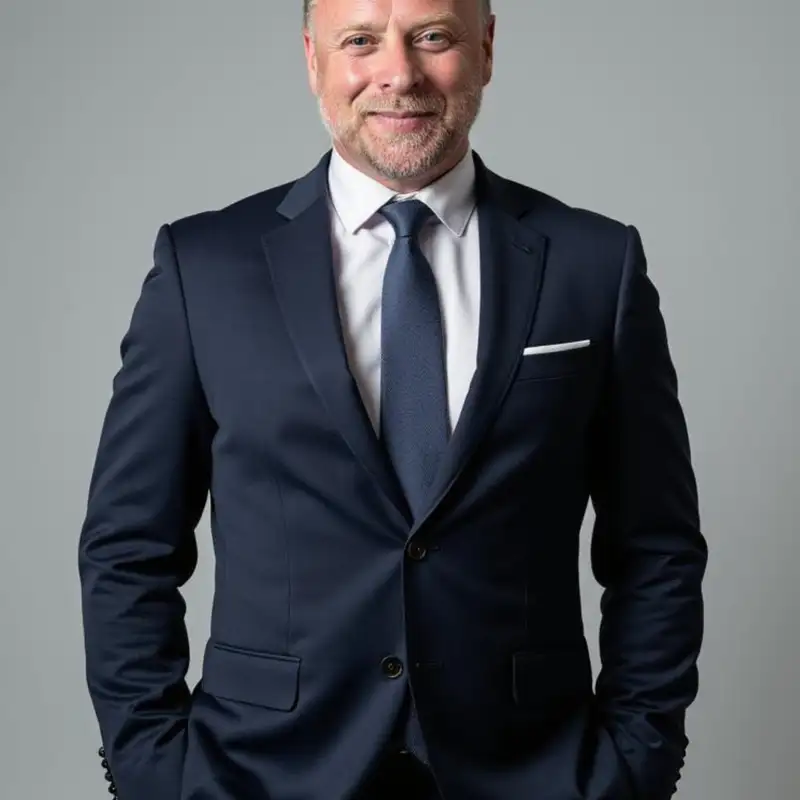
Chitty Chats with Stacy: Moving Mountains with Jon Konen
when you have a system where your
colleagues are supporting you and they
can sense that you may need some support
and you're okay with that, with them
telling you to tag in and tag out, I
don't know if there's anything higher
than that when you're dealing with the
most stressful situation and, people
are teaming with you and you can step
back and let someone else pop in to
help support there's not very many
environments that can do it seamlessly.
I'm really glad you're here.
This is a space where we talk with
all sorts of humans from all sorts
of places because stories matter.
And when we take the time to listen,
there's always something to learn.
So, wherever you're coming from
today, you're in the right place.
Let's get into it.
Hey friends.
Welcome back to another episode
of Chitty Chats with Stacy.
I am thrilled to finally have
my dear friend and colleague
John Conan on the pod.
Thank you for joining me, John Conan.
Thank you.
I'm glad to be on here and
excited to chat with you.
Yeah, me too.
I have wanted you as a guest since
I started doing this a couple
years ago, and as life happened
and I wasn't able to do that.
So thank you for your patience with me.
Let's give viewers a little bit,
or listeners a little bit of your
background and how we know each other.
So tell me what you want
us to know about you.
Sure.
First I think I'd like people to know that
I am a lifelong educator and I've been in.
You name it, almost every role you can
think of from starting off in second grade
teaching in my first job in Anchorage,
Mon Montana or Anchorage, Alaska.
And then fifth grade in
Montana, taught sixth grade.
And then have been a elementary principal,
high school principal, K 12, principal,
athletic director then a superintendent.
On my second.
Gig of doing a second superintendent.
Yeah.
Stint just here recently, so
that's a little bit about that.
But recently, over a year ago,
I, got remarried to an amazing
young lady and she is a special
ed teacher in a town close to me.
And I feel like man, her skills with
what she does in her job has definitely
helped me out in my world and my life.
And it has definitely given
me a second shot at love.
And I am excited to be down here.
I live in Hamilton, Montana,
in the Bitterroot Valley.
Our house is 17 miles away from
where the film Yellowstone was
the main house, the Dutton Ranch.
Yeah.
And we get to drive by there frequently.
And we actually love that show even
though people around here did not like
it because it changed our whole valley.
And yeah, prices on homes have just
skyrocketed in our valley, but we
love it here in in southwest Montana.
And, I am excited to excited
to chat with you more.
Yeah.
What I love about just your
intro is lifelong educator.
Your parents were educators too, right?
Yeah.
My mom was an educator.
She's 35 years.
Yeah,
in elementary.
I like to say that because as our past
influences are present and our future.
And so you, when you, when we say
lifelong educator, like forever,
you are raised by an educator.
You are an educator, you're
married to an educator, you
have children, the you, I like.
It's just all consuming.
And so part of what I chat
about with with people.
On our podcast is really how
you got into this business.
But what I wanna more specifically
chat with you about is how you got
into the business of shifting paradigms
in the schools within which you work.
So our relationship goes
back about 15 years ago.
We met.
Training, all this kind of stuff.
When I was really starting to do
trauma-informed practices, and
I think both of us can say that
over the last 15 to 20 years we've
seen huge shifts in education.
And so I would just like you to just
speak to what you've seen shifting
in education and how you're shifting
different paradigms that are not just
curriculum focused but relationally
focused and how we have to have
those relationships before we get the
test scores, those kinds of things.
Yeah, I've had on my tagline on my
email forever culture eat strategy.
And it's amazing how, even though a lot
of people will say that, but I've had
people attack that piece of it because
they, had just, met me and within
three months told me that I should
remove that tagline from my email.
And I was totally surprised on, I
hadn't put in the time to build in that
relationship, and it was great 'cause that
person did end up retiring two years later
and inviting me to be one of their guests
to speak at this person's retirement.
So it Wow.
It was like, come full circle with that.
In saying that, man, I've been in
several different schools where
when we started digging into working
on interventions for students with
academics, we started realizing
that we're missing the whole side.
We're talking 15 years ago when
people were changing from response
to intervention to multi tiers
of systems of support because
of that social emotional side.
And when we started digging into.
Helping out students with either
math or reading interventions.
We had to always talk about what else
was going on in their world because if we
didn't really tackle that piece as well
as the need for intervention in math or
reading we found that it didn't matter
what we did with that math or reading, if
we didn't help support them in the social
emotional side that it didn't matter.
In fact, we.
Saw kids digress if, when, that's
the only thing we worked on.
So we had to really talk
about the whole child.
And to do that, we had to
really educate a staff.
And the staff that I was in where
we, I first started working with
you 15 years ago we noticed that
our student population had shifted.
The free and reduced population had
just been increasing from before
I got there of 20 some percent.
9% within five years.
And so our dynamics of our town,
city where we were at had shifted
from being homes that were purchased
to being homes that were rented.
And with that changed the whole dynamics
of the students entering into our school.
And we started realizing as we dug
in to help support these students,
that we needed more information on
how to connect with our students,
especially had come from trauma.
Backgrounds and we noticed that
we needed to get some third party
support outside of what we were doing
and getting you into our school.
And start shifting that focus on just math
and reading interventions to the whole
child and making sure that we understood
what the student needed outside of that.
Really started shifting our school.
Yeah, I've had the privilege of
coming into several of your schools
and one of the things that I.
Love about you is how you hold the
resistance of some of the teachers
who maybe have not really bought into
all of this, and then you let the
strategies, the work, the relationship.
Just prove the system works.
And so what I wanna do is do a
behind the scenes look of what
is it like to hold resistance.
Because I know that, I call 'em the
haters because they just haven't,
they haven't got crossed over yet.
But I know that you've had those
conversations with your staff.
I know that you've had.
Board of Education members who've
also had those conversations
like you've had, especially in an
administrative role, you've had a
it's easy to say relationships matter.
Except for when you're the
administrator and everyone else has a
different agenda than maybe you have.
And so speak to that a little bit.
Yeah,
man, I have been so engaged with
reading two different books.
One the Tipping Point by Gladwell,
where he talks about how you can
cause a change, even if you don't have
50% of the population, but you have
just enough of the critical mass to
be able to move them forward is one.
And then John Gordon's.
Energy Bus.
Yeah.
Those two books over my career have
helped me realize that if we can
start getting some people to buy in.
And then start celebrating
them and telling the story
to the rest of the staff.
It then becomes contagious.
And then it is just like you said,
you gotta build that relationship.
But it, it is time, it's time and
consistency of those interventions
and those celebrations of telling
the story and narrative over time.
And people start
realizing, man, this stuff.
Does work if we team together and people
that are teaming are seemingly having
more success and happiness in their
job, and that becomes more attractive
to educators, even though right now
it's difficult being in education as
many different aspects attack what was
going on in public education right now.
And, it is something that we can continue
to need to do is to team around each
other and find those positive stories
and narrative that we can continue
to keep building from each other.
I've been in some situations though,
where I've had to come in where teachers
were literally fighting with each
other in the hallway in front of kids.
Yeah.
Really?
Lets you know where you
sit with handling conflict.
If you let that go and allow that to
persist, then that becomes the norm.
And so you gotta set those boundaries
and and you gotta communicate
what those expectations are.
And then you gotta build and revisit.
Those relationships, you can't heal them.
If you just handle it once and shove
it in the closet and hope it's doing
better, you have to revisit it.
And that's the hard part of
leaning into this difficult
those difficult conversations.
So I wanna give a shout out
to our buddy, Joe Bremmer.
The three of us have done some consulting
together with a school district, and
one of the things that we've really
talked about is becoming relationally
focused to address behavior issues.
And as you as an administrator who's
worked in multiple different schools,
when you become relationally focused
using the science behind regulation, using
the science behind these trauma-informed
practices, which are good for everyone
by the way, restorative practices, do
you see a change in your behavior slips,
your dropout rates, your attendance?
Talk to me about that.
What are the tangible things that you
see, like this is why it's so important.
And I, I would've never guessed the big
change that we had, but I would say in
the district where you came to work with
me at first, that was probably pretty
close to the most successful collective.
Efficacy towards an initiative that
I have been a part of, probably in my
education where we went from 470 some
referrals down to less than 90 referrals.
And I would say it's just, I can't
just say it's just the restorative
practices and trauma informed practices,
but it was a whole bunch of things.
We also got breakfast after the bell
where we started feeding kids more often.
We were more consistent with our
behavior system and how we communicated.
We all had a common language
that we used to work with kids.
We got to the point where we
would tag in and tag out with
kids that were struggling.
'cause when you have a system that where
your colleagues are supporting you and
they can sense that you may need some
support and you're okay with that,
with them telling you to tag in and tag
out, I don't know if there's anything
higher than that when you're dealing
with the most stressful situation and,
people are teaming with you and you can
step back and let someone else pop in
to help support there's not very many
environments that can do it seamlessly.
Love that.
And what you're talking about is that,
the strategies, the interventions, the
multi-tiered systems, all the things we're
talking about, don't just relate to kids.
This is also staff work.
It's you're living it, right?
Like when someone calls you out
and says, yo, Mr. Conan, I. Culture
is not eating strategy right now.
They're calling you out and
they're expecting you to live that.
And so it sounds to me like when
you are working in an environment
where there's more people living
it and not just checking the box,
doing the thing it goes better.
Is that what you're noticing?
What I've found is.
A lot of people have their perception
of a positive culture being the fluffy,
soft bunnies, and everyone is has
niceties that they do for each other.
Sure.
But what you don't talk about
is in these systems that are so
successful we don't talk enough
about the accountability piece of it.
Yeah.
Once we talk about accountability and know
what each other's expectations are and
then hold us to those ideals and morals
and expectations man, we better respect
each other and we better know each other.
I've had people in my career tell
me that I'm too close with my staff.
And I'm like when you're dealing with
some of the most traumatic students.
That you would ever come into your school.
You get close to these people
because it is such a human business.
And if we can't connect with those kids
together man, they're, it, the, just
the kids will run the school and then.
It'll be a place where there
is lots of physical violence
and bullying and all that.
And you'll, your referrals
will never come down.
It'll continue to burn teachers out.
And so that's when I would fight back
when these people are questioning me about
culture over strategy is the fact that,
accountability is a huge piece of culture
that it's just not all fluffy bunnies.
About Easter time.
Perfect timing.
People talk to me and they're always
like, Stacy, your stuff's woo.
It's hippy dippy and they don't
see the other side of that, which
is what you're talking about.
It also is you mentioned earlier.
Conflict, lots of conflict happening.
Accountability, conflict
in relationship and repair.
Rupture.
Repair, rupture, repair.
Yeah.
All of that is happening.
So there's all this other
stuff, which lends me to the
next part of our conversation,
which is really around culture.
And I know you're put making a huge
push, and I want you to talk a little
bit about what you're doing on your side
to really talk about toxic relationships
in education, people don't wanna go
hang out at the teacher's lounge.
If the teacher's lounge
isn't, it's a time suck.
It's an energy suck.
It feels toxic.
They don't wanna come to work if
they're working with toxic people.
So talk to me a little bit more about
the culture component, not just the
accountability piece, but all of it.
Like the layers of what happens
when we're shifting culture.
Sure.
Had this idea from.
Way back 15 years ago when we started
working with wing Calendar and
working on RTI response intervention.
Over the years I started putting in
place interventions for school culture.
Yeah.
And these interventions can be tracked
with data and similar to how you would
put in a reading or math intervention.
But you're putting in a culture
intervention and then you're tracking it
and see thing, see if it's successful, and
you might have to bundle it with something
else in order for you to see an impact.
And came up with 60 different strategies
that I've used that have been probably my
high success strategies that I've used in
schools and put it into a book that deals
with, interventions for school culture
and it's taking on some of this toxicity.
There are strategies in there that
work for entire school environments
that work for grade levels.
There.
There might be a department
in your building or it deals
with individual teachers.
'Cause we're not talking
about that enough.
There are so many books and information
out there about school culture, but
we aren't talking enough about what
are the actual interventions you
could use to put in place right now
and work on that school culture.
Some of those interventions and
track it to see if it's successful.
Yeah.
And so that's why I think it's unique.
It's a little bit different
shift from some of your big time
education gurus that are talking
about school culture right now.
But I think we need to in
individualize it to a school, to a
grade level, to a to a staff member.
I had the privilege of being
one of your early readers.
I think the book's fantastic.
I can't wait for it to come out.
And I think you and I are similar in
that we're not just talking theory.
We want actual strategies
that people can utilize.
They can read the book,
they can do the thing.
If you could give, if someone's
listening to this today, and let's just
say it's an administrator listening
today and they have a toxic culture
issue, maybe it's just one right.
We always say, 90% of your time
is spent on 10% of the people.
And so if you could just pull out,
out of your 60 strategies, what's
one thing in your strategies, one
intervention that you would do with that?
That person that's like just
bleeding all over everybody and
everyone's trying to walk on
eggshells around, what would you do?
What would you tell that administrator?
I think it goes back to.
The amount of time and consistency
that you've put into that person.
I would build it into you can
either call it a thermometer
check or a barometer check.
And a thermometer check is where
you go around to every single staff
member they, like before school.
Check in with them, ask them,
with a servant leadership premise.
What can I do for you today?
How can I help you?
How can I help support you?
And and I would do that consistently.
I would make sure to hit that person
every single day, and then I would
ask them about something personal
that I'm connected with them and
finding ways to be connected to 'em.
So I am gonna model one, communication
positive communication back and forth.
Two, I'm gonna show them that I'm
a servant leader and that I'm here
to help support, even though I'm
an administrator, my job is to help
support, to make sure this person's.
They are successful and I'm hoping
these strategies that we, that I
put in place, that they're gonna
start doing with the, with their own
students also, then that next level
is having that one-on-one conversation
with them, with no one else around.
And being able to let them know
that I see you, I hear you.
And I'm trying to help meet your
needs for you to be successful.
Once I have that.
Bank account per se, built
up with a lot of deposits.
I can then start asking
for some withdrawals.
Like I can start asking for, Hey, show me
some of the strategies that you might use
to build relationships within your class.
What are some ways that
you connect with kids?
How are your relationships with parents?
Then I can get more specific and
model some of the same things that I
would like for that person to see too.
That has been, that has worked probably.
90% of my people that I've dealt
with that are per se, toxic, I
would never call someone toxic.
It's kinda bullying to me.
Like bullying is such a generalized word.
Like we need to get down
to the specific behavior.
Same with toxicity.
You can't just call a hallway
toxic or a person toxic.
You need to, dig in deeper and
find out what's actually going on.
Yeah, 'cause as soon as you call them
toxic, holy cow, it's like fireworks
and it's defensive and it is right.
And it's on.
And then all of the money you've put
into that bank account gets withdrawn and
it's hard to build that back up again.
Yeah.
Love that.
One of the things that I've observed you
doing, and I think it's just great to call
out here, is you don't build relationships
behind your desk or in your office.
You are out and about, and I
wonder how that over your course
of your career has shifted.
Do you notice, like if you're in your
office, more things out in the world
are a little bit more dysregulated
versus if you're out in the world,
things feel a little bit more regulated,
like what are your observations.
I can tell you this is the hardest
position as superintendent to
get out into the world as I used
to be as a principal or teacher.
As a principal, I designed what my day
looked like and where I started it.
As a superintendent, I just
try, I still try to make it
in a school every single day.
And so I'm lucky enough to have a
district where all a thousand kids
are on the same campus, middle
school, high school, and elementary.
So I can pop into a school
within five to eight minutes.
And so sometimes I send an
email, sometimes I go over
and see a person face to face.
But I also want people to see me
though that I'm in the trenches working
with them and and understand the.
Culture that's going on.
Right now I'm gonna be honest,
I have been so bogged down with
the amount of stuff going on.
'cause we have a technology levy.
We have a two different building projects
that are starting up and, I have not
been out into schools like I, I normally
have and I know that, so I'm building it
in right after spring break this week.
We'll,
good.
I'll be back into schools, make
sure I'm out in the schools for love
a little while, every single day.
And I think I'm gonna add in some
listening sessions to end the year
here and just listen to people, give
them the op opportunity to talk to me.
We have a lot of change going
on in our district and I think,
sitting in my office, we're not
gonna be able to get all that out
and be able to help problem solve.
You bring up a good point, and
that is that every person in
a school district has a role.
A superintendent role is different
than an administrator role different
than your principal administrator is
different than your teachers, different
than your board members, students.
And one last topic I wanna chat with
you about before we end and we hear all
about your good stuff, parents, where do
parents fit into your school district,
your interventions, your relationships,
this has been a big question that I'm
getting from a lot of the schools I'm
working with is how do we include parents?
It's, there's been a huge
shift since COVID, I think.
I think it's been a significant shift.
There's way less communication with
parents, way less parent involvement.
Parents don't know how to get involved.
What are your recommendations?
Where do parents fit into education?
Oh man.
I think this is an untapped resource that
we need to continue to keep digging into.
I know there's a lot of educators,
out there that are afraid to let some
of the dysregulation they see from
some parents get into their school.
And so it's difficult 'cause they
might send an email to a whole
bunch of people rather than just
making the phone calls to 'em.
Yeah.
Or inviting them in face to face.
Yeah.
And so I would have a balance of
communication that I would be hitting.
Between electronic face-to-face
phone calls videos that you put out.
That's just one strategy.
The next is putting people on
committees, like getting people
onto different committees you
have going on in your school.
Right now I have a community advisory
committee where I have, it's.
On businesses and parents.
Then I have an AI task force, so we're
tackling artificial intelligence.
Before we could put any policies in place
this year, I felt like we gotta do some,
we did a book study and we brought parents
on board as well as students and staff.
Love that.
And talking about.
Artificial intelligence and what
it's gonna look like in our school.
And we started talking about what
it's gonna look like in our policy.
Love that.
And so we're getting them involved
in these early conversations.
Before we just put policy in place.
We had a policy from our.
District lawyer that we could have
put in place way back in September
and chose not to do that yet because
we wanted to build that foundation.
Then there is my, my the tech levy.
So getting people involved in initiatives
that you have going on in your school.
And so I, I have a group of parents
that are helping push information
out as well as meeting with me.
Able to get the
information that they have.
Another controversial one can be
putting in on hiring committees.
We hired for some administrative
positions this spring and I put parents
on each of these committees and so
love that some districts are afraid
to do that to give them a voice,
but I feel like it's important that
we give them a voice and do that.
Another one is, another initiative
we're gonna be working on this next
year is, right now we do a lot of
fundraising for our activities and sports.
And one of the things we're asking of
our school is if you're gonna do any
fundraising, what are, what is your group
gonna gonna do back for the community?
Yeah.
And we need to come up with at least every
classroom or every group come up with a
way to, to give back to the community.
Love it.
So we can say, 'cause right now
I'm sure we have families that say.
Yep.
Schools are just fundraising again.
They don't have any money.
They're always doing it.
They never give back to us.
And so now we can start saying in a more
concerned and organized effort that,
Hey, here are all the different things
that we're doing in the community, and
we're gonna tell that story about it.
Not bragging about it, but just
letting everybody know that we are
part of the community and we're
giving back because we know so many
in our community have given to us.
I
love that this is so helpful because even
I, I was had lunch with a parent yesterday
and she was like, do schools call parents?
Do they reach out?
Do they have a communication?
And I'm like.
Schools are just wonky
right now with parents.
We don't know what to do.
And so this is some tangible
strategies, which I always
appreciate from you, John Conan.
Tangible strategies
for how to engage that.
So tell people how they can reach
you, what you've got going on.
I want you to be shared with my people.
And I want them to be able to find you.
My people.
Become your people.
They're our people.
That's fantastic.
I, sometimes have a hard time even though
it may not look like that on social media.
I'm a little bit humble with
all the stuff I push out.
But if I want to go anywhere else in
this world, I'm gonna need to be able
to start talking a little bit more about
all the things that, that we're doing.
And obviously I'm on
Facebook and Instagram.
Have a website coming out, john
conan.com here pretty soon.
I have a consulting business
called John Conan Consulting.
And the motto is Moving Mountains.
And I have a podcast that just started.
I'm on episode five only, but it's about
moving mountains, removing toxicity.
So we talk with the kind
of same format, with every.
Person that's on the podcast
about strategies they've
used to deal with toxicity.
And a big one at the end is like talking
about what we can do for new teachers
coming in because we're not seeing a lot
of new educators coming into the business
nor are they staying in the business.
And so I think this is a
topic that is a reason why.
A lot of young educators get out
just because they may not have all
the strategies as a coming outta
college to, to deal with some of
this toxicity that is out there.
So between the website, social
media, and podcast, those are
the things that that I'm doing.
I'm also consulting in some schools
and just slowly working that up to to
doing future work more in that endeavor.
I love that we will make sure that in all
the show notes, they'll have links to your
stuff and people can be able to reach you.
So I'm gonna leave with one last
question, and this is a question
I'm really starting to focus on with
all the people I'm gonna interview.
What do you do to regulate, right
reg emotional regulation is ongoing.
And when we are emotionally regulating
all the people in our life, what
do you do to take care of yourself
and emotionally regulate so you
can keep your own head of up water?
I'm gonna tell you when I'm super
dysregulated, I have to co-regulate first.
So yeah, I have my wife
will help process with me.
I think that is huge is to have a partner
to be able to, or close friend, to be
able to process the stuff that's going on.
We've co-regulate each
other,
haven't we, throughout
the
years.
15, 15 years of it.
I think you are.
One of my favorite people to
really work for sure on that
and put new strategies in place.
So that's what I do to co-regulate
to regulate though man living in
Montana it's hiking, it's biking,
it's kayaking, it's water skiing.
Those are all the things I like to do.
In the summer.
My wife and I are huge beach
people, we like to visit
beaches and read on the beach.
If we could retire in the near future,
that'll be one of our main activities is
reading on the beach and being in the sun.
I love that.
So
yeah, I love that.
I know that your time is precious and
I always appreciate you taking time
to chat with me, and I am so excited
to see everywhere you're going, John.
The world needs more.
John Conan in it.
I tell you that all the time.
You're doing great work.
You're supporting schools in really
important ways, but mostly you're
supporting educators and you're
helping with the retention that we need
for educators to stay in education.
And I appreciate your passion.
Thanks for chatting with me today.
Thank you.
And I am just ecstatic to be
connected to you and I can't
wait to work with you more.
All right.
Take care.
Yep.
Thank you.
Creators and Guests